
Microbial Examination of Turf Power
Consistent. Verifiable. Research backed.
In everything truth surpasses the imitation and copy. – Marcus Tullius Cicero
Since the genesis and subsequent success of Turf Power many have attempted to copy the success. It’s time to weed out the empty and unproven claims and cut right to the facts.
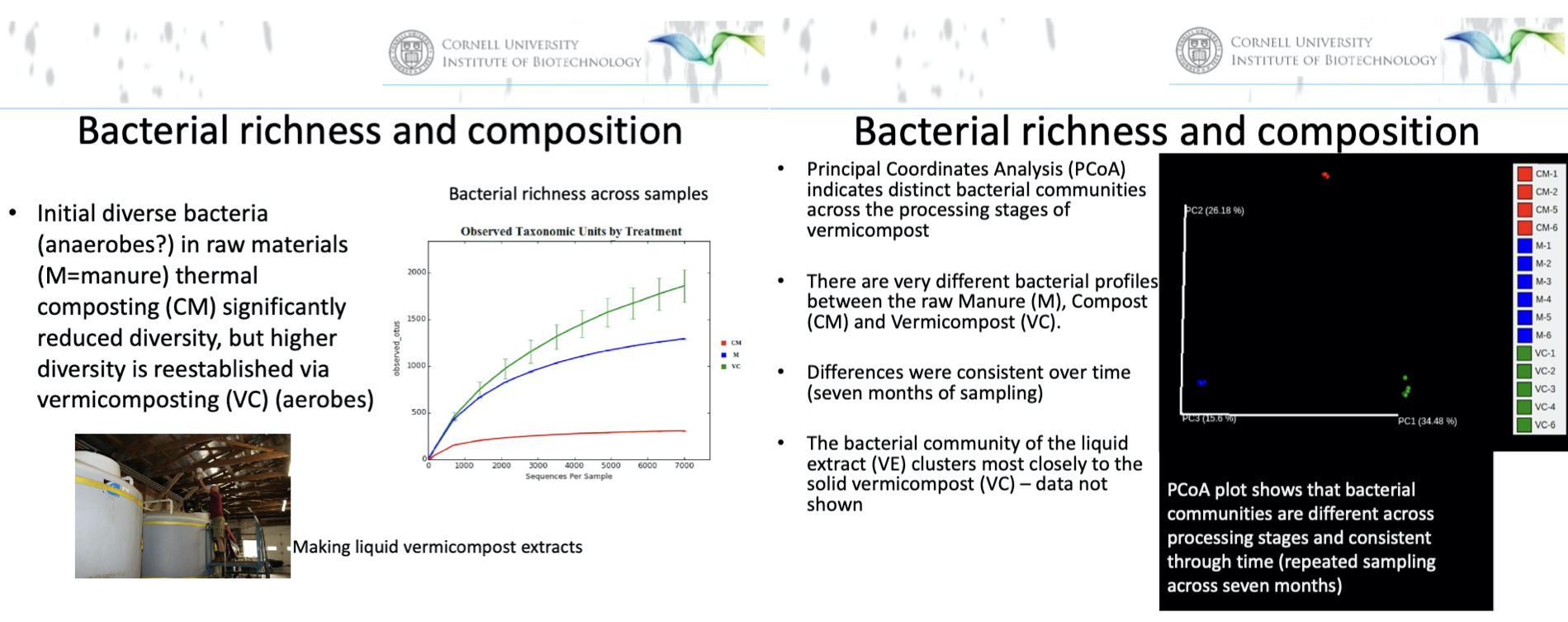
Turf Power has been awarded peer-reviewed research grants from State and Federal Agricultural Agencies. In 2015 Cornell University’s Institute of Biotechnology completed research examining the microbial makeup of Turf Power.
Through rRNA Gene Sequencing, Cornell identified at the species level over 1400 different microorganism in Turf Power.
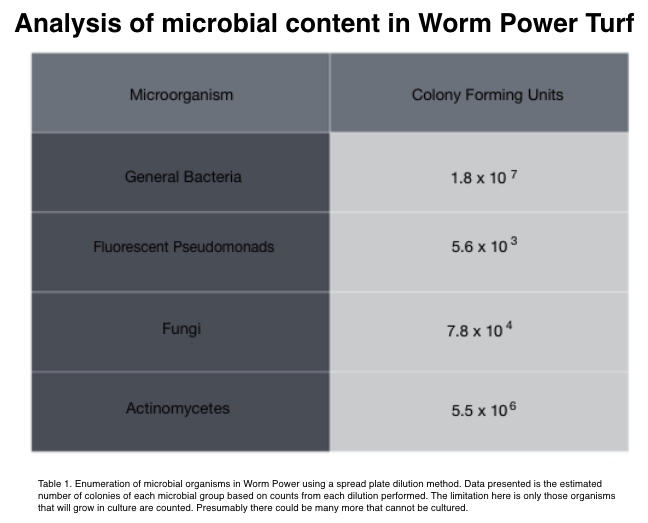
In 2016, NC State University completed research to determine the effects of Turf Power on turfgrass health and rooting; and analysis of the microbial content in Turf Power. The conclusion of this research found two things:
- In the two health studies it was very interesting that the Turf Power treatments showed significantly higher NDVI readings, especially in the creeping bentgrass study.
- The plating experiment demonstrates that Turf Power has enough microbial material in it to have an effect in turfgrass systems.
Rhizophagy Cycle: How microorganisms enhance plant nutrient uptake
In a recent golf course industry survey, turf managers were asked to rank what they feel is most important when considering trying a new product. Below are the results ranked as 1 least influential to 5 most influential.
- Product has University backed research – 3.84
- Supportive case studies of other turf managers using it – 3.99
- It’s worked for other turf managers – 3.89
Worm Power Turf checks all of the above!
When evaluating products to incorporate into your agronomic programs, ask for supporting evidence of marketing claims. Evaluate the total cost of the products. Make sure the product is worth the investment.